
The short version
- The EOS R8 is one of Canon’s most compelling full-frame values, especially for hybrid photo/video creators.
- Autofocus performance is a major strength, with reliable subject detection that feels “pro-level” in real use.
- It’s best for travel, portraits, events, and content creation, but less ideal for long telephoto sessions and heavy action workflows.
- Plan your kit around RF lenses (and possibly an adapter) to get the most from the system.
- Battery life and handling are the main trade-offs versus larger Canon R bodies.
In this article, you will learn who the Canon EOS R8 is for, what it does exceptionally well, and where its compromises matter. We'll cover image quality, autofocus, video performance, ergonomics, lens pairing, and real-world buying advice. By the end, you'll understand whether the EOS R8 is the right full-frame entry point into Canon RF for your photography and video goals.
Why the Canon EOS R8 Is Such a Smart Full-Frame “First RF” Body
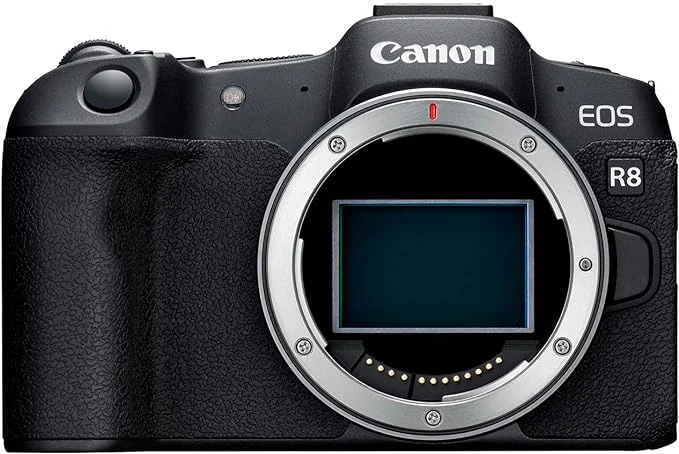
Full-frame look without full-frame bulk
The EOS R8 is built around a full-frame sensor, which is the main reason images can feel more “spacious” and cinematic, especially for portraits, indoor work, and environmental storytelling. You get stronger low-light flexibility and easier background separation than most APS-C bodies, even with modest lenses.
What makes the R8 stand out is how approachable it feels: the body is compact, the menus are familiar if you’ve used Canon, and the camera doesn’t demand a “cinema rig” mindset to get great results. For many shooters, it’s the first camera that makes full-frame feel like an everyday carry.
Canon’s RF ecosystem is the long game
Buying into Canon RF is less about a single body and more about a system that can scale. RF lenses tend to be sharp, fast to focus, and optimized for modern Canon features, especially subject detection and video stabilization workflows.
If you’re coming from older Canon gear, adapting EF lenses can be a cost-effective bridge while you build an RF kit. For a deeper lens strategy, see our prime vs zoom lens comparison to decide where to invest first.
Who it’s for (and who should skip it)
The R8 is ideal if you want a lightweight full-frame camera for portraits, travel, family documentation, events, and content creation. It’s also a strong “B-cam” for Canon shooters who want matching color and autofocus behavior in a smaller body.
You may want a different body if you shoot long sports days with big telephoto lenses, need dual card slots for mission-critical work, or rely heavily on in-body stabilization for handheld video. Those aren’t dealbreakers for everyone, but they’re the lines where “entry full-frame” becomes “needs a pro body.”
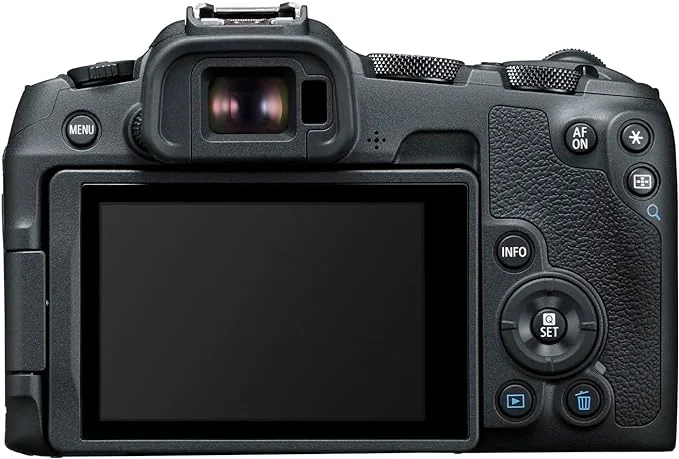
Image Quality: What You Can Expect from the EOS R8 Sensor
Dynamic range and highlight handling
Dynamic range is where full-frame pays off in everyday shooting: backlit portraits, bright skies, and mixed indoor lighting become easier to manage. The EOS R8 gives you the flexibility to lift shadows and recover highlights with fewer artifacts than many smaller-sensor cameras.
In practical terms, you can expose to protect highlights and still pull usable detail out of darker areas in post. If you’re learning exposure control, our exposure triangle guide pairs well with what the R8 can do.
High ISO performance for real-world low light
ISO performance is a major reason people move to full-frame. With the R8, indoor events, restaurants, and evening street scenes are much less stressful, especially when paired with a fast prime.
Noise is still noise (and underexposure still hurts), but the R8’s files tend to clean up well with modern noise reduction. For best results, prioritize correct exposure and avoid pushing extremely underexposed shadows.
Color, skin tones, and Canon’s “look”
Canon color is a big part of the appeal: especially for skin tones. The R8 produces pleasing, natural-looking people shots that require less correction than many alternatives, particularly under mixed lighting.
If you shoot JPEG or want fast turnaround, Canon’s color science and picture styles can be a workflow advantage. If you shoot RAW, you still benefit from a solid baseline that grades predictably.
Autofocus and Speed: The R8’s Secret Weapon
Subject detection that feels confident
The EOS R8’s autofocus is the kind you stop thinking about: which is the highest compliment. With subject detection AF, the camera can lock onto faces/eyes and maintain focus as your subject moves or turns.
This is especially valuable for candid portraits, kids, pets, and events where you don’t get a second chance. If you’re upgrading from older DSLR AF systems, the improvement can feel dramatic.
Continuous shooting for action and moments
Burst shooting helps you catch peak expression and fast movement. The R8 is responsive enough for casual sports, dance, and energetic family life, particularly when paired with lenses that focus quickly.
The main consideration is workflow: faster bursts mean more images to review and store. Make sure your memory cards and culling process can keep up.
Where speed meets ergonomics
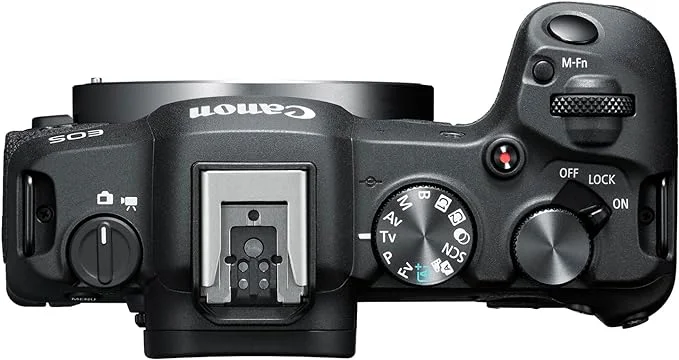
Speed is more than frame rate. It’s how quickly you can change settings without breaking rhythm. The R8 is straightforward, but its smaller body can feel less “anchored” with heavier lenses, and some shooters will miss extra external controls found on higher-tier bodies.
If you frequently shoot in changing light, set up custom modes and quick menus early. For a structured approach, our camera menu setup guide (menu philosophy applies across brands) can help you think through a clean, repeatable configuration.
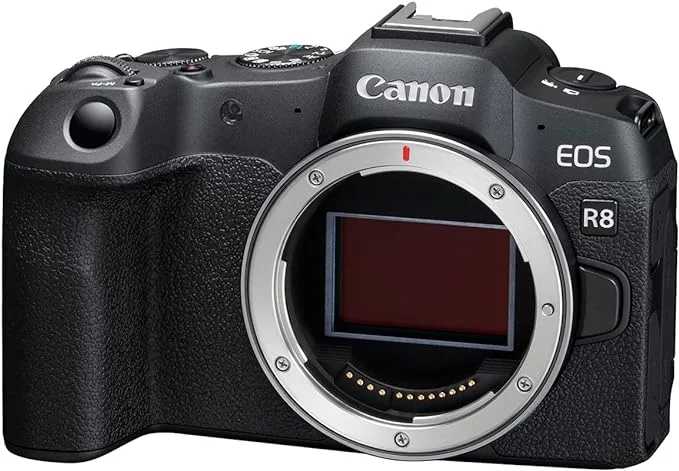
Video Performance: Why the EOS R8 Is a Standout Hybrid Pick
4K detail and oversampling benefits
The R8 is compelling for video because it can produce crisp, detailed 4K. Both its 4K/60p and 4K/30p modes use the full width of the sensor, oversampled from 6K for higher detail; a crop mode is there if you want extra reach.
If you deliver in 1080p, starting with higher-quality 4K capture can still improve your final output after downscaling: especially for skin and foliage detail.
10-bit options and grading headroom
10-bit video is available on the EOS R8 and is a meaningful step up if you color grade or shoot Canon Log. It reduces banding in skies and smooth gradients, and it holds together better when you push contrast and saturation.
If you’re new to grading, 10-bit still helps, even if you only apply light corrections. The key is to keep exposure consistent and avoid wildly mixed color temperatures when possible.
Stabilization realities (and how to work with them)
IBIS is not a feature on the EOS R8, because the camera does not include in-body image stabilization. Instead, you’ll rely on optical stabilization in compatible lenses and/or Movie Digital IS for video.
For walking shots, consider stabilized RF lenses, wider focal lengths, and deliberate movement. If you do lots of handheld run-and-gun, a body with IBIS (or a gimbal) may be worth budgeting for.
Handling, Battery, and Reliability: The Trade-Offs You Should Know
Small body advantages (and the grip question)
A smaller body is a gift for travel and daily carry. You’re more likely to bring the camera, which often matters more than marginal spec differences. The R8 also packs well with a compact prime, making it a strong “always ready” full-frame option.
The flip side is comfort with larger lenses. If you plan to use heavy RF zooms, consider whether you prefer a deeper grip and more physical controls found on larger bodies.
Battery life and how to plan around it
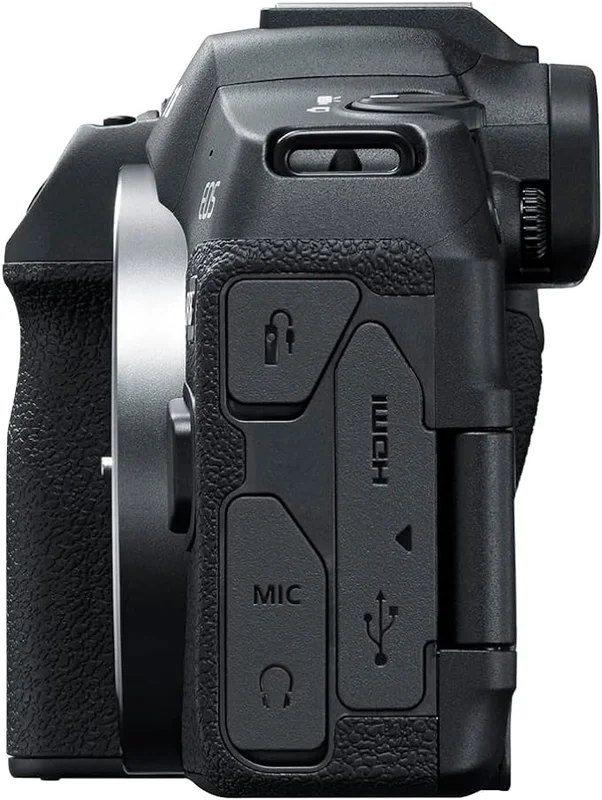
Battery life on compact mirrorless bodies is often the first real-world limiter. The EOS R8 uses the Canon LP-E17 battery, which is smaller than the batteries used in some higher-end EOS R bodies, so carrying spares is a good idea for long days or lots of 4K recording.
A practical approach: treat one battery as “casual,” two as “serious,” and three as “all-day.” Also consider power management habits, screen brightness, sleep timers, and turning off wireless features when not needed.
Single card slot and professional risk tolerance
Dual card recording is a feature many pros require for weddings and paid events. The EOS R8 has a single SD card slot, so it can’t record redundant in-camera backups.
If you shoot paid work, mitigate risk with high-quality cards, disciplined file offloading, and redundant backups as soon as possible. If you need in-camera redundancy, you may want to step up to a body with dual slots.
Lens Pairing and Kit Building for the EOS R8
Start with a “do-everything” zoom or a fast prime
Most new R8 owners are happiest when they pick one lens that matches how they actually shoot. A general-purpose zoom covers travel and family life; a fast prime covers portraits, indoor light, and subject separation.
If you’re unsure, build around your most common scenario: kids indoors, travel outdoors, or portraits. Then add a second lens that fills the biggest gap.
RF vs EF: when adapting makes sense
RF mount lenses are the native choice, but EF adaptation can be a smart budget move, especially if you already own EF glass. With Canon’s EF-EOS R mount adapter, many EF lenses are compatible and can deliver strong autofocus performance.
The key is balancing size: adapted EF zooms can make the small R8 feel front-heavy. If compactness is your priority, native RF lenses often restore the “small full-frame” advantage.
Picking focal lengths for your style
Portrait shooters often love 50mm and 85mm primes for flattering perspective and strong background blur. Travel shooters tend to prefer 24–70mm-style ranges. Video creators often benefit from wider lenses for handheld stability and framing flexibility.
If you want a structured way to choose, use your phone’s focal length metadata (or your old camera’s EXIF) to see what you naturally shoot most.
EOS R8 vs Alternatives: How to Decide Without Spec Overload
R8 vs APS-C: what you gain (and what you don’t)
Compared to APS-C, full-frame mainly buys you better low-light flexibility and easier shallow depth of field at equivalent framing. You also often get a more “forgiving” look for portraits and indoor shooting.
What you don’t automatically get is better reach for wildlife or sports, APS-C can be advantageous there due to the tighter field of view. If your priority is long-lens action, APS-C may still be the better value.
R8 vs higher-end Canon R bodies
Moving up the Canon line typically adds features like IBIS, dual card slots, larger batteries, and more robust handling. The R8’s value proposition is that it delivers excellent image quality and autofocus without paying for every pro safeguard.
If you’re shooting for yourself or for low-risk client work, the R8 can be the sweet spot. If you’re shooting once-in-a-lifetime paid events, those pro safeguards start to matter more.
R8 vs Sony: choosing based on workflow and comfort
Many buyers cross-shop Canon and Sony. Rather than obsessing over lab charts, focus on what you’ll touch every day: menus, ergonomics, lens costs, and how quickly you can get to your preferred settings.
If you’re also considering Sony, it helps to understand the lineup tiers and what each model is “for.” See our Sony camera lineup explained and, if you already own a Sony body, our best Sony settings for beginners to compare how each system fits your habits.
Who Should Buy the EOS R8 (Use-Case Checklist)
Travel, family, and everyday storytelling
If your goal is to carry a full-frame camera more often, the R8 is a strong match. The combination of compact body, dependable autofocus, and excellent low-light performance makes it easy to capture meaningful moments without turning photography into a production.
Pair it with a compact lens and you’ll have a setup that’s genuinely enjoyable to bring along, often the deciding factor in whether you actually get the shot.
Portraits and small event work
The R8 shines for portraits thanks to full-frame depth of field control and confident eye AF. For small events, it’s fast enough to catch candid moments and expressive gestures without constant focus anxiety.
Just be honest about your risk tolerance: single card slot and smaller battery mean you should build a careful backup routine if you’re being paid.
Hybrid creators who shoot photo + video
For creators who alternate between stills and video, the R8’s video quality and autofocus behavior are a major selling point. You can move quickly from a photo sequence to a talking-head clip without switching systems or re-learning controls.
If handheld stability is central to your style, budget for stabilized lenses or support gear, and keep your focal lengths wider when moving.
Complete Shopping Shortlists: Best Picks by Use Case
Best “first full-frame Canon RF” for most people
If you want the most affordable, modern-feeling on-ramp to Canon full-frame mirrorless, prioritize strong autofocus, excellent image quality, and a body you’ll actually carry. This is the category where the EOS R8 makes the clearest case.
Best for lightweight travel + content creation
Travel-focused shooters benefit most from compact bodies that still deliver full-frame files and dependable autofocus. Keep your kit small, pick one versatile lens, and optimize for the camera you’ll bring everywhere.
Best for portraits and family moments
Portrait and family photography rewards reliable eye detection, pleasing color, and low-light flexibility. A full-frame body that nails focus quickly can make your keeper rate jump immediately.
Questions
Is the Canon EOS R8 good for beginners?
Yes, if you want full-frame image quality with modern autofocus and a straightforward shooting experience. It’s approachable in auto modes, but it also has enough depth to grow into manual control and serious video.
Does the EOS R8 have in-body image stabilization (IBIS)?
No, the EOS R8 does not include IBIS. You’ll rely on optical stabilization in certain RF lenses and/or digital stabilization for video, plus good handheld technique.
Is the EOS R8 good for weddings and paid events?
It can be, especially for smaller jobs, but the single card slot and smaller battery are important considerations. If you shoot critical once-in-a-lifetime events regularly, a dual-slot body may be a better fit.
Can I use my older Canon EF lenses on the EOS R8?
Yes, with an EF-to-RF adapter you can use many EF lenses with strong autofocus performance. This is a common way to save money while transitioning into the RF system.
Is the EOS R8 better than an APS-C camera?
For portraits and low light, full-frame advantages are real: cleaner high ISO and easier background blur. For wildlife and budget telephoto reach, APS-C can still be the better value depending on your lens needs.
How we researched this
On Nov 3, 2026 we checked the 26 factual statements in this guide (specs, numbers and comparisons) against the sources below. 16 were confirmed. 10 could not be confirmed from these sources yet.
- EOS R8 - Canon Camera Museum · global.canon
- Canon R8 Review: Lab Tests, Sample Images & Verdict - Imaging Resource · imaging-resource.com
- Canon EOS R8 Review: The Best Full-Frame Canon for Most People | PetaPixel · petapixel.com
- Canon EOS R8 review | Digital Camera World · digitalcameraworld.com
- Canon EOS R8 Review | Photography Blog · photographyblog.com
- Canon EOS R8 Review · the-digital-picture.com

Photographer and video producer since 2008, with editorial work for Forbes and the Tribeca Film Festival and brand work for Disney, Apple Pay and Burton. He has shot every Canon 5D, Hasselblad and Phase One medium format, and works on a Sony FX3 today. In Denver he runs the content for UFC lightweight Drew Dober and for Easton Online, a consultancy for gym owners. More about Jeff